
One of the most consequential questions families ask is also one of the most misunderstood: “Will Medicare or Medicaid pay for Mom’s care?” The answer depends on the kind of care needed, where it is delivered, medical eligibility, financial eligibility, state rules, and the individual’s coverage. Assuming that Medicare pays for ongoing personal care can create a costly surprise.
In brief: Medicare primarily covers qualifying healthcare services, not most ongoing custodial long-term care. Medicaid may cover certain nursing facility services and home- and community-based long-term services for eligible people, but benefits and eligibility vary by state and program. Neither program should be treated as a blanket promise that any chosen provider or service will be paid for.
Medicare and Medicaid: the essential difference
Medicare is a federal health insurance program primarily for people age 65 and older and certain younger people with qualifying disabilities or conditions. Medicaid is a joint federal-state program that provides health coverage and, for eligible individuals, can be an important source of long-term services and supports. Some people qualify for both programs; they are often called dually eligible.
Medicare eligibility is not generally based on low income, while many Medicaid pathways use financial and other eligibility criteria. Medicaid rules governing income, assets, transfers, spousal protections, and long-term care differ and can be complex. Families should confirm details with the relevant state Medicaid agency or a qualified professional.
What Medicare does and does not cover
According to Medicare.gov, Original Medicare does not cover long-term custodial care when that is the only type of help needed. Custodial care includes assistance with routine activities such as bathing, dressing, eating, and using the bathroom. This remains true whether the care takes place at home, in assisted living, or in a nursing home.
Medicare may cover medically necessary skilled services under specific rules. For example, qualifying home health services may include intermittent skilled nursing, physical therapy, occupational therapy, speech-language pathology, and limited home health aide services when linked to qualifying skilled care. The person generally must meet homebound and other coverage criteria; 24-hour home care and stand-alone custodial care are not covered.
Medicare Part A may cover a limited stay in a skilled nursing facility when all eligibility conditions are met. This is not the same as an unlimited nursing home benefit. A Medicare-covered rehabilitation episode should never be assumed to pay for long-term residency after skilled services end.
What Medicaid may cover for long-term care
Medicaid is often central to paying for long-term services and supports for financially and otherwise eligible people. Subject to program rules, benefits may include nursing facility care and services intended to support people at home or in the community. Home- and community-based services (HCBS) programs can include personal assistance, respite, case management, certain home modifications, and other approved services.
Important: a state may offer a service through a particular waiver, state-plan option, or managed-care program but not to every Medicaid enrollee. Some programs have enrollment limits, waiting lists, functional eligibility requirements, provider restrictions, or geographic rules. Availability must be checked in the person’s state.
Will Medicare or Medicaid pay for in-home caregivers?
This question requires two separate conversations. If someone needs intermittent skilled treatment and qualifies for Medicare home health, Medicare may cover specified healthcare visits and limited related aide services. If someone mainly needs ongoing assistance with bathing, meals, supervision, or companionship, Original Medicare generally does not pay for that assistance by itself.
Medicaid may fund qualifying personal-care or HCBS support in the home, depending on state programs and individual eligibility. Some state programs may permit certain self-directed arrangements or eligible family caregivers, but do not assume that a relative will be paid. Ask the state agency exactly which programs exist, who qualifies, and which workers or family members are permitted.
Does Medicare pay for assisted living or nursing homes?
Medicare generally does not pay room and board in assisted living or long-term custodial nursing home care. It may still cover separately eligible medical services for an enrollee who lives in one of those settings. Medicaid may cover qualifying nursing facility services; assisted living support varies substantially by state and program, and room-and-board rules differ. Request a written breakdown of what is covered and what the family must pay.
How to begin a Medicaid long-term care inquiry
Step 1: Document care needs
Record assistance needed with activities of daily living, mobility, medication management, cognition, behavior, and supervision. Ask clinicians to document conditions and functional limitations. Eligibility for a particular program may depend on functional assessments as well as finances.
Step 2: Contact the state Medicaid agency
Ask specifically about long-term services and supports, nursing facility eligibility, personal-care programs, and HCBS waivers. Request current application instructions and written explanations of income, asset, and functional criteria. Eligibility and funding rules change; generic internet numbers may be outdated.
Step 3: Review the full financial picture with qualified help
Gather information about income, assets, ownership interests, insurance, recent transfers, and marital status. Do not transfer or give away assets based on a casual suggestion: Medicaid long-term care has complex rules that can include transfer penalties, estate recovery, and important protections. An elder-law attorney or other qualified local adviser can explain potential consequences.
Step 4: Compare actual service options
Ask which providers participate; whether there is a waitlist; how many hours or services might be authorized; how appeals work; and whether the arrangement remains feasible if needs increase. Obtain written care and payment information rather than relying on a verbal estimate.
What if a parent has Medicare and Medicaid?
People eligible for both can receive Medicare-covered medical services while Medicaid may assist with certain costs and long-term supports, depending on enrollment and state rules. Coverage coordination can be complicated, especially with managed-care plans. Ask the applicable plans and state agency which program is responsible for each service and whether prior authorization or network participation is required.
Alternatives and additional sources of support
When a service is not covered, families may use personal income and savings, qualifying private insurance, veterans’ benefits, nonprofit programs, family support, or other public assistance where available. The most useful plan estimates not only monthly care expenses but also future changes, including overnight supervision, accessible transportation, and a possible move to a different level of care.
The local Area Agency on Aging, State Health Insurance Assistance Program (SHIP), and the state Medicaid office can be useful starting points. Families should verify that a person offering insurance, legal, or financial advice is appropriately qualified and does not have an undisclosed sales incentive.
Questions families frequently ask
Does Medicare pay for 24-hour home care?
No. Medicare.gov states that Medicare does not pay for 24-hour-a-day care at home. Qualifying intermittent home health coverage has specific limits and requirements.
Will Medicaid automatically cover assisted living?
No. Medicaid coverage for services in assisted living depends on the state, the applicable program, and the person’s eligibility. Room and board may remain the resident’s responsibility.
Can a family caregiver get paid through Medicaid?
Sometimes, under particular state and program rules. Eligibility, self-direction options, worker qualifications, and restrictions involving relatives vary. Contact the state Medicaid agency to establish whether a specific arrangement is permitted.
Should families give away assets to qualify for Medicaid?
Do not make transfers without individualized qualified advice. Transfers can have significant consequences, and there may be protections and planning options that depend on the facts and state law.
Turn confusion into a workable care and payment plan
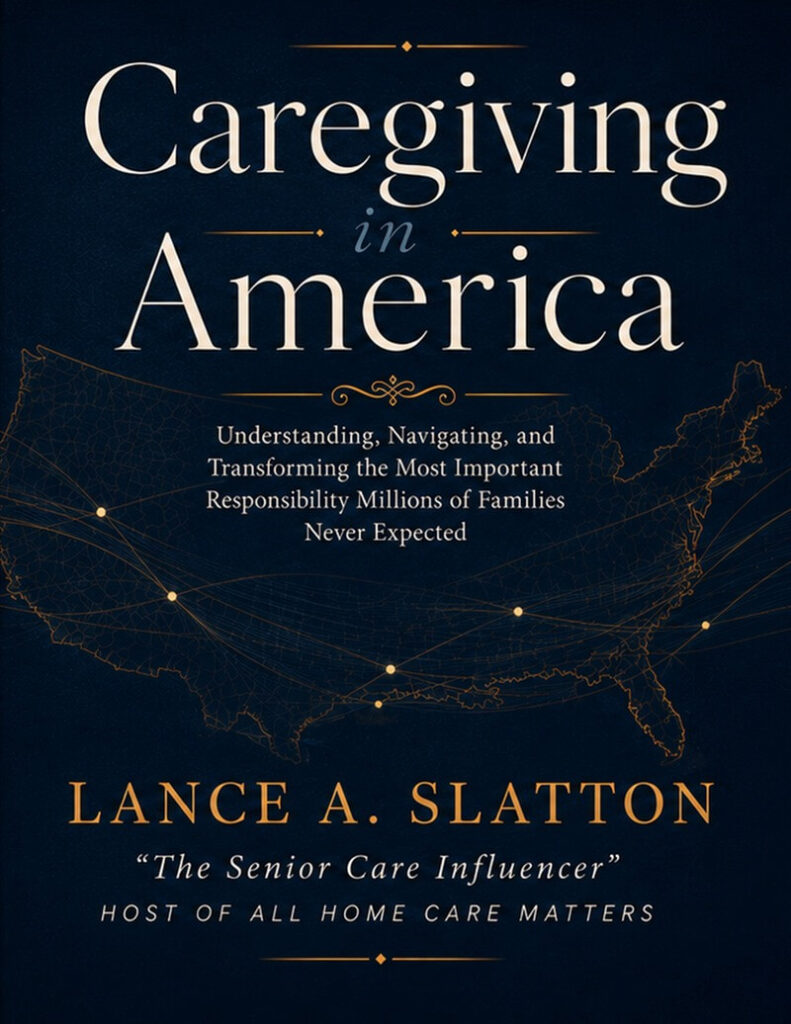
Caregiving in America by Lance A. Slatton addresses Medicare, Medicaid, healthcare navigation, financial and legal planning, and long-term care choices as part of a broader family caregiver reference. Its worksheets, checklists, glossary, and curated resources help readers organize the questions they need to bring to agencies and professionals.
Explore the book at https://caregivinginamericabook.com/the-book/. Before making coverage or financial decisions, always verify the latest requirements with official programs and qualified state-specific advisers.
Sources and further reading
Medicare.gov, long-term care: https://www.medicare.gov/coverage/long-term-care
Medicare.gov, home health services: https://www.medicare.gov/coverage/home-health-services
Medicare.gov, nursing home care: https://www.medicare.gov/coverage/nursing-home-care
Medicaid.gov, 1915(c) HCBS waivers: https://www.medicaid.gov/medicaid/home-community-based-services/home-community-based-services-authorities/home-community-based-services-1915c
Medicaid.gov, 1915(i) HCBS: https://www.medicaid.gov/medicaid/home-community-based-services/home-community-based-services-authorities/home-community-based-services-1915i
Information is general and subject to changing federal and state rules; verify benefits and eligibility with official agencies and qualified advisers.