Caring for someone with Alzheimer’s disease or another form of dementia can transform an ordinary day into a series of unfamiliar decisions. A repeated question may be a request for reassurance. A missed medication may be a safety concern. A familiar home may suddenly need a different routine. Families often need more than a definition of dementia; they need practical ways to preserve dignity, reduce avoidable risks, and make care sustainable.
Dementia caregiving is the ongoing support of a person living with changes in memory, thinking, behavior, communication, or daily functioning. The right approach evolves as needs change. It combines attentive observation, medical partnership, environmental safety, thoughtful communication, and support for the caregiver—not a single rigid checklist.
What is the difference between dementia and Alzheimer’s disease?
Dementia describes a group of symptoms severe enough to interfere with everyday life. Alzheimer’s disease is one cause of dementia, but not the only one. Other conditions include vascular dementia, Lewy body dementia, and frontotemporal dementia. Symptoms, progression, and care needs can differ, and some changes in thinking have potentially treatable causes. A medical evaluation matters; families should not assume that new confusion is “just aging.”
If a person experiences sudden confusion, abrupt weakness, difficulty speaking, severe new agitation, or a dramatic change in alertness, seek urgent medical evaluation. Sudden changes may point to a medical problem rather than gradual dementia progression.
Start with the person, not the diagnosis
A person living with dementia still has preferences, history, routines, relationships, and the right to be included in decisions to the greatest extent possible. Ask what matters to them now. Preserve familiar habits when they are safe. Offer a meaningful choice instead of taking over every task. Adjust the level of help to actual ability, not a label or an assumed stage.
Families can begin with a simple care profile: usual daily routine; foods and activities enjoyed; important relationships; medical conditions; medications and allergies; hearing or vision needs; sources of distress; effective ways to calm or redirect; and the person’s preferences about care. Share a current copy with trusted caregivers and clinicians.
Communication strategies that can make daily care easier
Communication difficulties may arise from word-finding problems, distraction, fatigue, or difficulty interpreting complex instructions. The National Institute on Aging recommends a calm approach, eye contact, patient listening, and allowing extra time for an answer. A person may understand a warm tone or a reassuring gesture even when words become difficult.
- Approach from the front, use the person’s name, and reduce background noise before starting a conversation.
- Use one idea at a time. Replace a long explanation with a short, respectful sentence.
- Offer simple choices: “Would you like tea or water?” rather than an open-ended list of possibilities.
- Validate the feeling before correcting facts. “That sounds upsetting. I’m here with you” may work better than an argument about what happened.
- Watch for pain, hunger, overstimulation, fear, or fatigue when a conversation suddenly becomes difficult.
- Avoid speaking about the person as though they are not present or testing their memory with “Don’t you remember?”
A useful principle is to adapt the conversation to the person’s current ability rather than expecting the person to adapt to ours. What worked last month may need to change next month.
Making a home safer without taking away dignity
Home safety in dementia care is not simply about locking doors. It is about anticipating how changes in judgment, vision, balance, orientation, and routine may affect everyday spaces. Walk through the home at the time of day when challenges are most likely. Look for clutter, poor lighting, unsecured medications, risky appliances, loose rugs, and confusing entrances or exits.
- Review medication storage and administration; use a clinician- or pharmacist-approved medication system.
- Improve lighting and contrast at stairs, thresholds, hallways, and bathrooms; remove trip hazards.
- Assess cooking and driving safety early and revisit both as circumstances change.
- Create a plan if the person becomes lost: recent photo, emergency contacts, identification information, and safe ways to alert trusted supporters.
- Keep emergency numbers and important medical information easy for caregivers to find.
- Use safeguards that respect privacy and local laws; no device replaces human supervision when continuous supervision is needed.
If wandering or getting lost becomes a concern, do not wait for an emergency to discuss it. Ask the care team about an individualized safety plan and community programs appropriate to the family’s circumstances.
Understanding behavior as communication
Restlessness, resistance to bathing, repeated questions, or changes in sleep can feel personal to a tired caregiver. Often they are signals that something is uncomfortable, confusing, frightening, or unmet. Before labeling a behavior as “difficult,” consider recent changes in medication, pain, infection, constipation, poor sleep, sensory overload, loneliness, or a disruptive routine.
Try documenting what happened immediately before and after an episode. For example: “At 5 p.m., the kitchen became noisy; Dad began pacing; a quieter room and a snack helped.” Patterns can guide practical changes and give healthcare professionals information they can use. New or escalating symptoms deserve clinical review.
Planning care as dementia progresses
Dementia is not a uniform journey. Some families can manage at home for years with increasing support; others face complex safety or medical needs sooner. Reassess care when there are more falls, medication errors, wandering incidents, weight changes, caregiver exhaustion, or repeated emergency visits. These are signals to evaluate resources—not proof that a family has failed.
Create a flexible care plan
- Name the person who coordinates medical appointments, medications, insurance questions, and family updates.
- Discuss advance directives, healthcare decision-makers, and financial documents while the person can participate; consult qualified local professionals.
- Identify trusted backup caregivers and test respite arrangements before a crisis.
- Ask about adult day services, home care, geriatric care management, support groups, and memory-care options.
- Revisit goals: safety, comfort, social connection, familiar surroundings, and the wishes of the person receiving care.
Supporting the dementia caregiver is part of the care plan
Family caregivers may become sleep-deprived, socially isolated, or overwhelmed by repeated small decisions. Respite, a reliable medication process, shared responsibilities, and honest conversations about limitations are safety measures for both people. Assign specific jobs to willing relatives: one person handles groceries, another schedules appointments, and another provides a regular afternoon break. Specific requests are easier to fulfill than “Let me know if you can help.”
A caregiving plan is stronger when it includes what happens if the primary caregiver becomes ill, needs to travel, or simply reaches capacity. Respite is not a reward earned after burnout; it is a legitimate component of ongoing support.
Questions families frequently ask
What should a new dementia caregiver do first?
Arrange an appropriate medical assessment; make a current medication and contact list; identify immediate safety concerns; and begin a simple routine. Prioritize urgent risks before trying to solve every long-term decision at once.
Is it better to correct someone with dementia?
Accuracy matters when a decision affects safety or medical treatment. In ordinary distressing conversations, repeated correction may increase fear or embarrassment. A calm response that addresses the emotion, followed by gentle redirection when appropriate, is often more helpful.
When is home care no longer enough?
There is no universal threshold. Consider the person’s safety, medical needs, level of supervision, quality of life, and the caregiver’s ability to provide reliable care. Review options with clinicians and qualified care professionals before a crisis whenever possible.
How Caregiving in America supports families
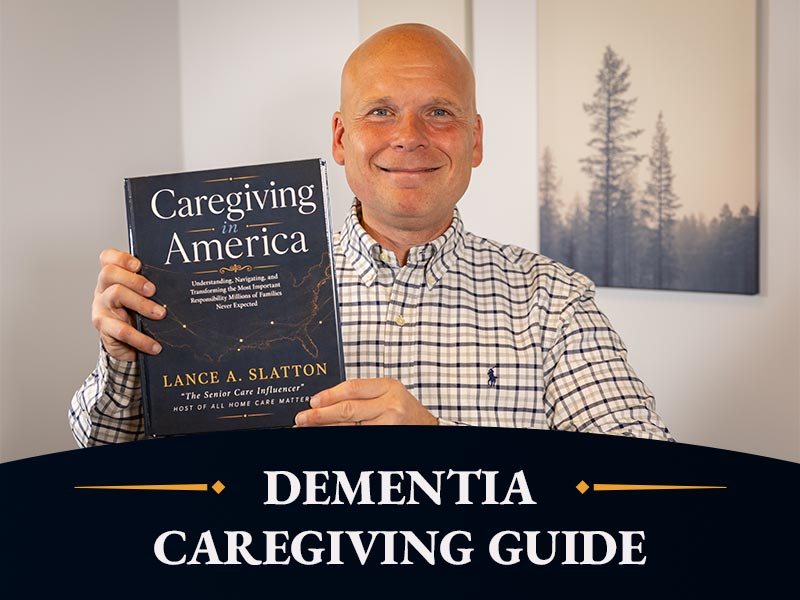
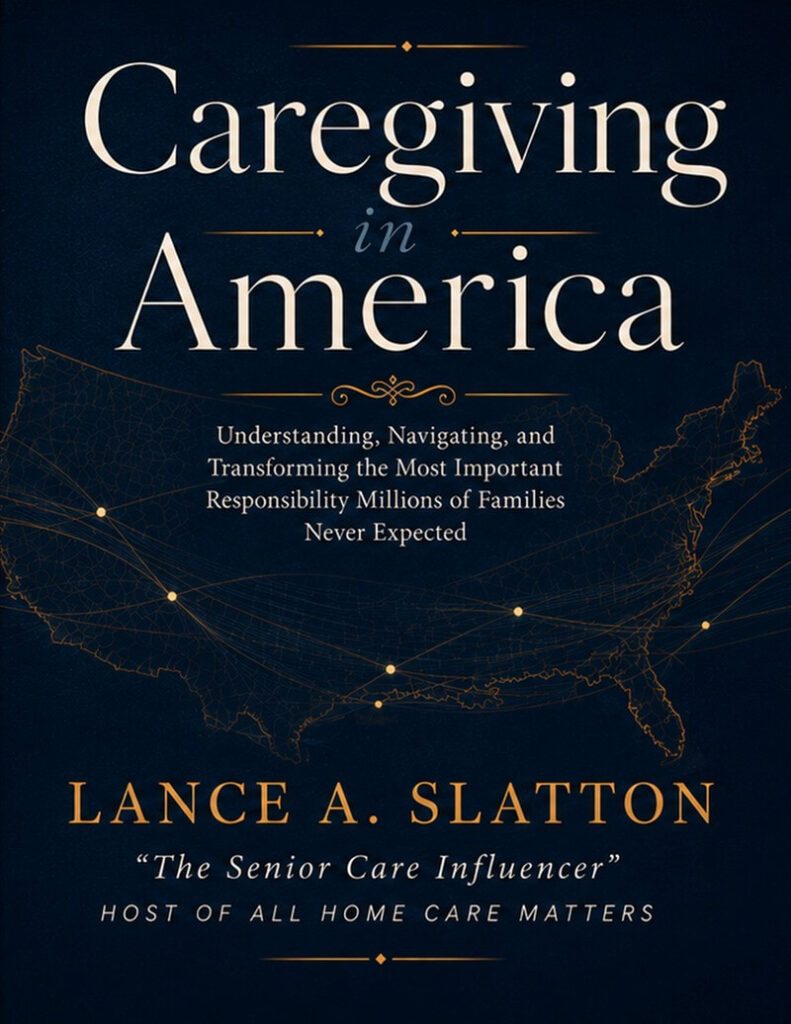
In Caregiving in America, Lance A. Slatton brings the perspective of a family caregiver and senior-care professional to the practical decisions families face. The 766-page guide includes dedicated dementia caregiving guidance, care options, family conversations, checklists, self-assessments, and national and state resources. It is designed to be consulted at the moment a question arises, rather than read only from beginning to end.
Families can learn more about the book and its practical tools at https://caregivinginamericabook.com/the-book/. For additional dementia-related perspectives and resources, visit AlzAuthors at https://alzauthors.com/.
Sources and further reading
National Institute on Aging, communicating with someone who has Alzheimer’s: https://www.nia.nih.gov/health/alzheimers-changes-behavior-and-communication/communicating-someone-who-has-alzheimers
National Institute on Aging, communication tips: https://www.nia.nih.gov/health/alzheimers-changes-behavior-and-communication/dos-and-donts-communicating-person-who-has
Educational information only; not a substitute for individualized medical advice or emergency care.